
Jason Everman has one of those life stories that sounds like it was made up by a bloke three pints deep at the pub.
He was in Nirvana before they became the biggest band on the planet. Then he was in Soundgarden before they became one of the defining bands of the grunge era. Most people would dine out on either of those facts for life, even if the ending was awkward. Everman did something much stranger. He left the music world behind, joined the US Army, became a Ranger, then went on to serve as a Green Beret.
That is not a career change. That is a hard reset.
Everman’s name is often attached to the great rock “what if?” stories. He was there, close enough to touch history, but never quite part of the version that made it into the mainstream mythology. Yet reducing him to “the guy who missed out on Nirvana and Soundgarden” does him a disservice. The more interesting story is what he did after those doors closed.
Before Nirvana Became Nirvana
Jason Mark Everman was born in Alaska in 1967 and later grew up in Washington state, near the Seattle scene that would soon change rock music. As a teenager, he was drawn into punk, metal and the heavier end of underground music, years before grunge became a global label.
Before Nirvana, he played guitar in Stonecrow with drummer Chad Channing. That link helped bring him into Nirvana’s early line-up with Kurt Cobain, Krist Novoselic and Channing. This was not the polished Nirvana of Nevermind. It was the broke, van-touring version: loud, awkward and still trying to survive.
Everman had money saved from working in Alaska and helped pay for the recording of Bleach. The figure usually attached to the bill is $606.17. In a typical rock-history twist, he was credited as guitarist on the album and appeared on the cover, but did not actually play on the record. The credit was effectively a thank you for helping fund it and for being in the band at the time.
That left him in a strange place: visible on one of alternative rock’s most important debut albums, but not actually heard on it.
Two Near-Misses In The Seattle Scene

Everman did play live with Nirvana. He toured with them in 1989 after Bleach came out, when the band were still an underground act rather than a worldwide phenomenon. He was also part of a studio session that included Nirvana’s cover of Kiss’s “Do You Love Me?” and an early version of “Dive”.
The arrangement did not last. Everman later said he struggled with the idea of only ever being the second guitarist, while others around the band have described him as difficult on tour. Whatever the exact reasons, the chemistry was wrong, and he was out before Nirvana’s breakthrough.
From the outside, that looks like a nightmare bit of timing. In truth, nobody in 1989 knew what Nirvana would become. Everman was leaving a tense situation in a band still scraping along.
Then came Soundgarden. After bassist Hiro Yamamoto left, Everman joined them for the Louder Than Love tour. Soundgarden were signed to a major label, Chris Cornell was already a serious frontman, and the band’s heavy sound was travelling beyond Seattle.
Again, though, it was temporary. Everman toured with Soundgarden but was gone before their biggest years. As with Nirvana, it seems to have been less about ability and more about fit. Bands are pressure cookers. Talent matters, but so does temperament, timing and whether people can live together when everything gets uncomfortable.
Everman later played with OLD and Mind Funk, appearing on Mind Funk’s 1993 album Dropped. But the music life was losing its pull. He had been close to two huge bands, but closeness was not the same as purpose.
Swapping The Stage For The Army
In 1994, Everman enlisted in the US Army. He was in his late twenties, older than many new recruits, and he arrived with a backstory most soldiers definitely did not have. He had already toured with Nirvana and Soundgarden. Now he was starting again from the bottom.
The move sounds bizarre, but there is a logic to it. Music had given him identity, noise and almost-fame, but also instability and frustration. The Army offered something different: structure, standards and a clear test. Nobody cared that he had been in famous bands before they were famous.
Everman went on to serve with the 2nd Ranger Battalion, part of the 75th Ranger Regiment. That was no casual reinvention. The Rangers are an elite light infantry force, and getting there requires fitness, discipline and the ability to perform under pressure.
For a man who had spent years as the added member, the temporary fit, the bloke on the edge of someone else’s story, the appeal is understandable. In the Rangers, the question was simpler. Could you do the job? Could people rely on you? Could you keep going when things got ugly?
The Green Beret Years
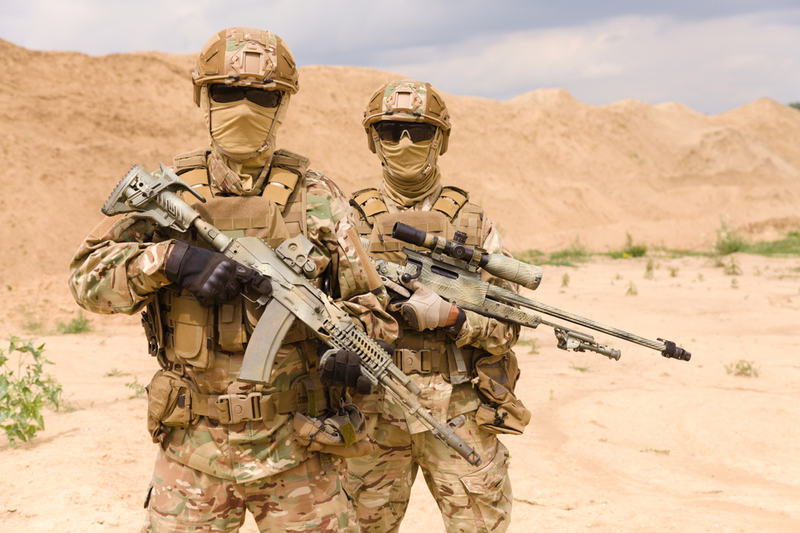
Everman later returned to the Army and followed the Special Forces path. He served with the 3rd Special Forces Group, became a Green Beret, and deployed during the wars in Afghanistan and Iraq.
That is the part that makes the story feel almost unreal. Plenty of musicians reinvent themselves after leaving bands. Very few go from the Seattle rock scene to elite military units and combat deployments.
Special Forces work is not just about toughness. It involves unconventional warfare, small teams, difficult environments and situations where judgement matters as much as aggression. The job requires physical strength, but also adaptability, patience and the ability to work with people under pressure.
That is what makes Everman’s military chapter more interesting than the simple “rocker becomes soldier” version. It was not a costume change or a public rebrand. It was a real second life, lived far away from the mythology of Seattle music.
War is not glamorous, and the Army is not a magic cure for a restless mind. But some men do need a harder test than the life they have drifted into. Everman found one.
The Life Beyond Both Uniforms
After military service, Everman studied philosophy at Columbia University’s School of General Studies and later pursued military history at Norwich University. He was also selected as a Tillman Scholar. He has spoken about developing the artist, the warrior and the philosopher. With most people, that would sound painfully grand. With Everman, it is hard to argue.
Music eventually came back as well. In 2017, he helped form Silence & Light with fellow veterans. The band has used its music to raise awareness around mental health, particularly for veterans and first responders. It was not a return to chasing the rock-star life he missed. It was music with a different purpose behind it.
The easy version of Everman’s story is that he was unlucky. He missed Nirvana. He missed Soundgarden. He was close enough to rock history to be haunted by it forever.
The better version is that he refused to become a professional almost-was. He did not let the most frustrating chapter of his life become the whole book. He went from underground music to elite soldiering, then into education, then back to music on his own terms.
Jason Everman could have been remembered only as the man who nearly had the rock-star life. Instead, he built a far stranger one.