
If you’re expecting homebrewing to save you money, it’s probably going to disappoint you. The upfront spend on a basic setup, the steady trickle of “small upgrades”, the ingredients you swear you won’t splurge on next time… it adds up. The point isn’t the bargain pint.
The point is the process.
Homebrewing is one of those hobbies where you can feel yourself getting better in real time. It’s part kitchen ritual, part science experiment, part patience test. And at the end, you get beer. Sometimes very good beer. Occasionally, something you’ll force yourself to finish out of stubbornness.
Here’s what it actually involves, what you need, and why so many people get hooked.
Why People Brew Beer At Home
The Satisfaction Of Making Something Proper
There’s a quiet pride in pouring a pint you made yourself. Not “assembled”, not “heated up”, not “added to a cart”. Made. Even if you start with a beginner kit, you’re still running a process that turns grain sugars into alcohol with yeast. That’s ancient, practical magic.
The Tinkering And Control
People get into homebrewing because it’s a hobby with levers to pull. You can change bitterness with hops, body with malt, aroma with late additions, flavour with yeast choice and fermentation temperature. Brewing at home gives you a level of control you don’t get when you’re standing at a supermarket shelf trying to pick between eight versions of “hoppy”.
The Slowness Is The Feature
Fermentation takes time. Conditioning takes time. You can’t rush it without consequences. For a lot of lads, that’s the appeal: it forces you to leave something alone and let it become what it’s meant to be. Primary fermentation for many beginner-friendly ales is often roughly one to two weeks, with extra time after packaging for carbonation and conditioning.
The Community And The Stories
Homebrewing has a weirdly friendly culture. People share recipes, argue about temperature control, and swap warnings about the same mistakes. Even if you never join a club, you end up with “brew day” stories, the kind you tell your mates while they’re nodding like they understand, then asking if they can have a bottle.
What You Need To Brew Beer At Home
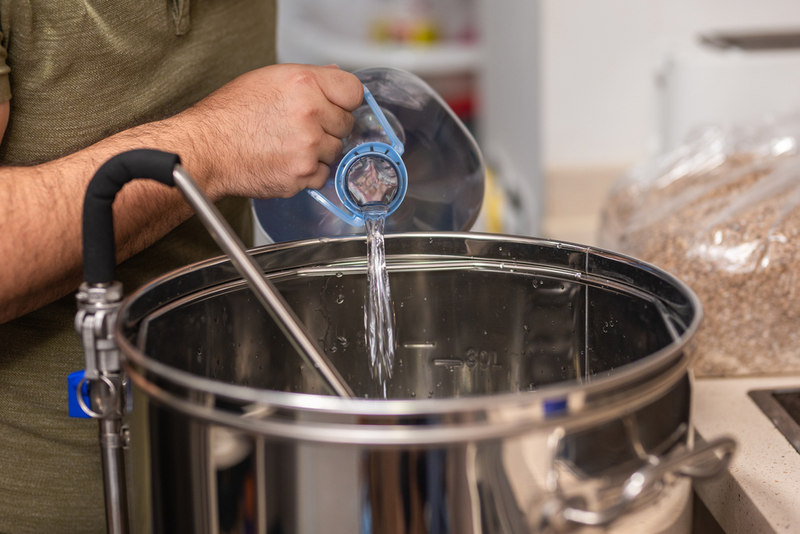
You can do this in a very “get it done” way, or you can disappear into a gear rabbit hole. Start simple.
Essential Equipment
- Fermenter with lid (food-grade bucket or similar)
- Airlock (lets CO₂ out without letting oxygen and bugs in)
- Cleaner and sanitiser (this is non-negotiable)
- Large pot for boiling (bigger helps, but you can begin with what you’ve got)
- Thermometer
- Siphon and tubing for transferring beer
- Bottles and caps, plus a capper, or a keg setup if you’re that way inclined
Optional but useful: hydrometer (measures gravity so you can estimate alcohol and track fermentation)
Most beginner guides and starter kits revolve around this same basic kit: something to ferment in, something to package with, and the ability to keep everything clean and sanitised.
Ingredients
- Water
- Malt extract or malted grain (the sugar source)
- Hops (bitterness, flavour, aroma)
- Yeast (turns sugar into alcohol and CO₂)
For your first few brews, malt extract kits are the simplest route. All-grain brewing is brilliant, but it adds extra steps and extra ways to mess things up. Get a couple of decent batches under your belt first.
The How To Bew Your Own Beer: A Straightforward Process
There are a few different methods, but this is the core “extract brewing” flow that most beginners start with. The fundamentals are the same even if you go all-grain later.
Step 1: Clean And Sanitise Everything
Cleaning removes visible grime. Sanitising kills the stuff you can’t see that ruins beer: wild yeast, bacteria, and anything else that turns your pride and joy into sour regret.
Anything that touches cooled wort or finished beer should be sanitised: fermenter, airlock, spoon, siphon, bottles, caps, the lot. Most beginner homebrewing guides hammer this point because it’s the number one cause of failed batches.
Step 2: Make The Wort
Wort is unfermented beer. Think of it as sweet, hoppy tea before yeast gets involved.
Heat water in your pot, then add malt extract (or grains if you’re doing partial mash/all-grain). Stir properly to avoid scorching. Once you’re at a boil, you’ll add hops according to your recipe.
Step 3: Boil And Add Hops
Most recipes boil the wort for around 60 minutes, though it varies. During the boil you add hops at different times:
- Early additions for bitterness
- Later additions for flavour and aroma
This is where beer becomes your beer. Two people can brew the same base wort and make it taste completely different just by changing the hop schedule.
Step 4: Cool The Wort Quickly
Once the boil is done, you need to cool the wort down to a yeast-friendly temperature. The quicker you cool it, the better, because you’re reducing the window where unwanted microbes can get involved and you’re helping the beer form a cleaner profile.
Some people use an immersion wort chiller. Others use an ice bath. Either works. Many guides suggest cooling below about 25°C before transferring and pitching yeast, though your yeast packet will tell you what it likes.
Step 5: Transfer To The Fermenter And Pitch The Yeast
Pour or siphon the cooled wort into your sanitised fermenter. Add the yeast. Seal the lid and fit the airlock.
Some beginner guides also stress aerating the wort (basically splashing it a bit) before fermentation starts, because yeast needs oxygen early on to build healthy cells.
Step 6: Ferment At A Sensible Temperature
This is where a lot of first-time homebrewers accidentally sabotage themselves.
A common rule of thumb is that many ales ferment best somewhere around 18–22°C, while lagers generally want colder conditions. Exact ranges vary by yeast strain, but temperature control matters because hot ferments can create harsh flavours and cold ferments can stall.
Leave it alone. Don’t lift the lid every day to “check”. The airlock bubbling is fun, but it’s not a perfect indicator of progress. Most beginner-friendly ales are typically left around one to two weeks for primary fermentation, depending on recipe and conditions.
Step 7: Package The Beer
Once fermentation is finished, you’ve got flat beer. Now you need to carbonate it.
- Bottling: You add a measured amount of priming sugar so the yeast creates a little CO₂ in the sealed bottle, carbonating the beer naturally. Many guides recommend adding priming sugar to a bottling bucket, transferring the beer onto it, then bottling from there to mix it evenly.
- Kegging: Faster to serve and easier for big batches, but more gear and more cost.
For most first-timers, bottling is the standard route.
Step 8: Condition, Then Drink It
After bottling, the beer usually needs time at room temperature to carbonate, often roughly a couple of weeks, then extra time cold to taste its best. Again, it varies, but patience is baked into the hobby.
What Usually Goes Wrong On Your First Brew

The most common mistake is poor sanitising. Cleaning isn’t the same thing. You can have spotless-looking equipment that’s still carrying wild yeast or bacteria, and they will happily ruin your batch. Anything that touches cooled wort or finished beer needs to be properly sanitised. If a brew turns sour, medicinal, or just plain odd, this is usually the culprit.
Fermenting at the wrong temperature catches a lot of beginners out. Yeast isn’t just a switch you flick — it behaves differently depending on heat. Too warm and you can end up with harsh, solvent-like flavours. Too cold and fermentation can stall before the job’s done. A stable room temperature suitable for your chosen yeast makes a bigger difference than most people expect.
Impatience is another classic error. It’s tempting to bottle as soon as the bubbling slows down, but that doesn’t always mean fermentation has finished. Bottling too early can lead to over-carbonated beer, excessive foam, or in worst cases, dangerous pressure build-up in bottles. Giving the beer the full recommended time — and ideally checking gravity with a hydrometer — avoids a lot of stress.
Opening the fermenter repeatedly to “check on it” is also a problem. Every time you lift the lid, you risk contamination and oxidation. Once the yeast is in and the lid is sealed, the best thing you can usually do is leave it alone.
Finally, many first-time brewers overcomplicate things. Throwing in extra hops, unusual ingredients, or attempting technically demanding styles like lager straight away increases the chances of disappointment. Starting simple, learning what a clean fermentation tastes like, and building from there almost always leads to better results.
Why It Still Feels Worth It
Homebrewing is one of those hobbies where the reward isn’t only the finished thing. The reward is the day itself. The smell of hops. The small routines. The gradual improvement. The fact you can taste your own decisions in the glass.
And when you finally pour a pint that’s clear, properly carbonated, and genuinely good, it hits different. Because you didn’t just buy it.
You earned it.