
Anyone who used to train before life got in the way will tell you the same thing – getting back into shape long after your six pack became a dad bod feels like starting over—but it isn’t.
Here’s something most men don’t realise until they experience it first-hand: you’re not starting from scratch.
You might feel like you are. You walk back into a gym after years off, everything feels heavier than it should, your lungs give up before your muscles do, and you’re questioning why you ever thought this was a good idea. But underneath all of that, something’s still there. Something that hasn’t gone anywhere.
That’s muscle memory. And it’s a lot more real—and useful—than most people give it credit for.
The Strange Feeling Of Coming Back
There’s a very specific kind of frustration that comes with getting back into training after time off.
You remember what you used to lift. You remember how easy certain things felt. And then you try to do them again, and it’s like someone’s swapped your body out for a worse version overnight.
The weights feel awkward. Your timing’s off. Even simple movements don’t feel natural. It’s not just that you’re weaker—it’s that you feel disconnected from it.
That’s usually the point where people either push through or quietly drift back out of the gym again.
Because it feels like starting over.
But it isn’t.
What Your Body Still Knows
Here’s the part that doesn’t get talked about enough: your body remembers more than your head does.
Muscle memory isn’t just some buzzword. When you train consistently over time, your body adapts in ways that don’t just disappear the moment you stop. Strength, coordination, movement patterns—those things get stored deeper than day-to-day fitness.
So even if you’ve been off for months or years, you’re not the same as someone who’s never trained at all.
That old version of you—the one who could lift properly, move well, handle heavier weight—it’s still in there. It’s just buried under a bit of rust.
And once you start again, it comes back faster than you expect.
The Difference Between Feeling Weak And Being Back At Zero
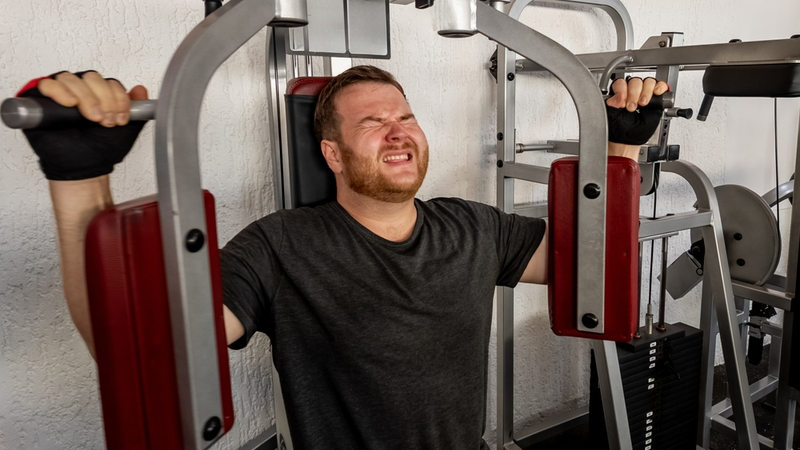
This is where most people get it wrong.
They judge everything off the first couple of sessions back.
You feel weak, so you assume you are weak. You struggle, so you assume you’ve lost everything. And mentally, you put yourself in the same category as someone who’s never trained a day in their life.
But that’s not what’s happening.
The first few sessions are rough because your body’s out of practice, not because it’s forgotten everything. Your nervous system isn’t firing the same way. Your timing’s off. Your endurance has dipped.
But the foundation is still there.
That’s why, if you stick with it, things start to click again surprisingly quickly.
Movements feel smoother. Weights that felt impossible a couple of weeks ago start to move. You don’t have to relearn everything—you just have to wake it back up.
How It Shows Up In Real Life
You don’t even need a gym to see this.
Think about the last time you picked up a football after years of not playing. You might be a bit slower, a bit less sharp, but you can still strike the ball cleanly. The technique’s still there.
Same with riding a bike. Same with swimming. Same with any physical skill you spent time building.
You don’t consciously remember how to do it—you just do it.
That’s muscle memory in action. It’s your body holding onto patterns you’ve already wired in.
And lifting weights is no different.
If you’ve spent years training properly—learning form, building strength, understanding how your body moves—you don’t lose that overnight. Or even over a few years.
It sticks.
Why It Comes Back Faster Than You Expect
This is the part that catches people off guard.
You go in expecting months of slow progress just to get back to where you were. But instead, within a few weeks, you’re already seeing signs of the old version of you.
Strength starts returning. Coordination improves. Even your confidence in the gym shifts.
It’s not magic. It’s just your body picking up where it left off.
You’ve already built the pathways before. You’ve already done the hard part of learning how to train. So instead of starting from zero, you’re rebuilding on something that’s still there.
That’s why two people can follow the exact same programme and get completely different results—one’s genuinely starting fresh, the other’s just shaking off the dust.
The Mental Barrier Is The Bigger Problem

If anything holds people back here, it’s not physical—it’s mental.
Because feeling out of shape is uncomfortable. It messes with your ego. Especially if you know what you used to be capable of.
There’s a temptation to either:
- Push too hard too quickly, trying to prove you’re still that guy
- Or give up early because you’re frustrated at how far you feel you’ve fallen
Both miss the point.
The reality is somewhere in the middle. You’re not who you used to be yet—but you’re also not starting from scratch.
Once you accept that, the whole process becomes a lot easier to handle.
You stop chasing your old numbers on day one. You stop writing yourself off after a bad session. And you start recognising progress for what it actually is.
What This Means As You Get Older
There’s a quiet upside to all of this that most people don’t think about.
The work you put in earlier in life doesn’t just disappear. It carries forward.
So if you trained seriously in your 20s or 30s, even if life got in the way later—work, family, whatever—you’ve still got something to come back to.
That puts you in a completely different position to someone who’s never built that base at all.
It doesn’t mean it’s easy. It doesn’t mean you’re immune to getting out of shape. But it does mean you’ve got an advantage waiting for you if you decide to use it.
And that’s not a bad position to be in.
You’re Closer Than You Think
The biggest takeaway from all of this is simple: you’re not as far off as you feel.
That gap between where you are now and where you used to be? It looks bigger than it actually is.
Because your body hasn’t forgotten. It’s just waiting for you to give it a reason to remember again.
So if you’ve been putting it off—telling yourself you’d have to start from zero, that it’s not worth it, that you’ve left it too long—you’re probably wrong.
You’ve already done the hard part once.
And that counts for more than you think.